EnchantedLearning.com is a user-supported site. As a bonus, site members have access to a banner-ad-free version of the site, with print-friendly pages. Click here to learn more.
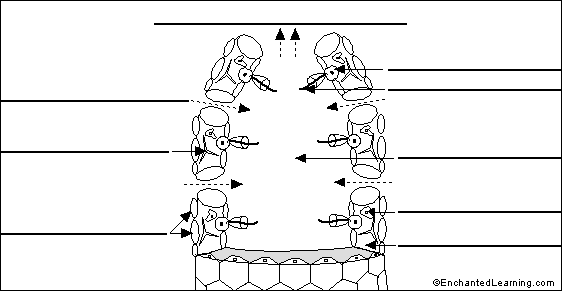
archaeocyte (amoebocyte) - Cells with pseudopods, located in the mesohyl. They are used in processing food, distributing it to other cells, and for other functions. choanocyte - also called the collar cell, thse cells line the inner cavity of the sponge and have a flagellum. The sponge obtains its nutrients and oxygen by processing flowing water using choanocytes. epidermis (pinacocyte) - the epidermis is the layer of cells that covers the outer surface of the sponge. The thin, flattened cells of the epidermis are called pinacocytes. flagellum - the whip-like structure of a choanocyte; the flagellum moves, pushing water (which contains nourishment) through the sponge. mesohyl (mesenchyme) - the gelatinous layer between the outer body of the sponge and the spongocoel (the inner cavity). spicule - spicules are sharp spikes (made of calcium carbonate) located in the mesohyl. Spicules form the "skeleton" of many sponges. spongocoel - the central, open cavity in a sponge through which water flows. water flows in through porocytes - water flows into a sponge through cells with pores (these cells are called porocytes) located all over its body. water flows out through the osculum - water flows out of a sponge through large openings called oscula (plural).